Agents reason.
Neumetria remembers.
One view of the person, whether a person taps or an agent asks. Held between sessions, ready before each turn, and when an agent proposes an action, your policy runs against it before the turn ends.
Ship agents that
know the person.
More banks are shipping agents and more fintechs are shipping copilots. The ones people come to trust will know the person they are talking to, and check that the turn fits before the model speaks or acts.
Almost no one is an average user. Grounded in how this person actually earns, spends, and holds, the same agent becomes specific, and specific is what feels helpful.
Neumetria is the layer an agent reads before it plans: one current financial state for the person, plus readiness gates for the kind of moment this is, each versioned and confidence-weighted. What the agent may do with it is your policy, not the band.
And when you run more than one agent, they all read the same state and meet the same person: the copilot, the lending agent, the wealth assistant.
Memory, built in.
Neumetria holds what is known about the person outside the model, versioned, confidence-weighted, and current, so every session starts from what is already understood. Context windows come and go; the understanding stays.
Then ask: is this
the moment?
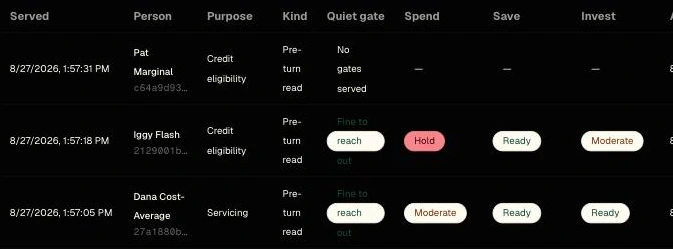
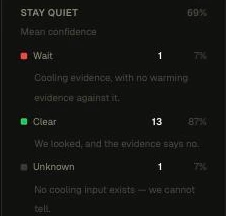
Knowing the person is half of a trustworthy turn. The other half is timing: whether this moment fits spend, save, invest, or silence. Gates answer that before an agent speaks or acts.
Query. Gate.
Your product decides.
- ReadAgent runtime fetches the state and gates before planning a turn.
- EvaluateYour product applies policy on top of readiness: allow, tone, escalate, or withhold. Or publish the policy, and we execute it against the action the agent proposes.
- RecordEach read and each policy run is stored verbatim with its evidence, so you can show later what the agent was told and what your policy returned. You still own the duty of care.
// illustrative grounding bundle
{
  "state": { "posture": "stable_improving", "confidence": 0.94 },
  "basis": {
    "income_rhythm": "biweekly",
    "behavior_drift": "cooling_19d"
  },
  "gates": {
    "spend_readiness": "moderate",
    "save_readiness": "hold",
    "stay_quiet": false
  }
}
Agents propose.
Your policy decides.
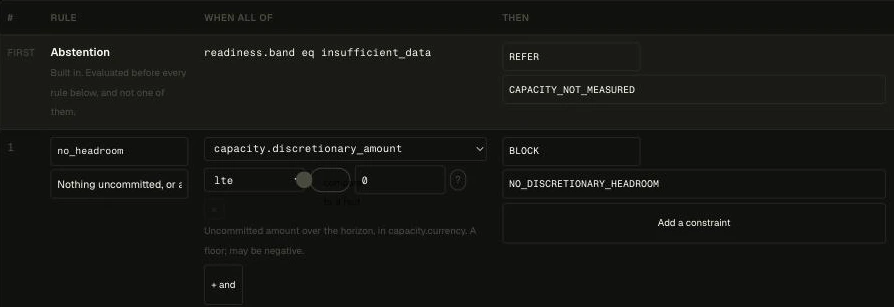
A band describes the person. An action is specific: this purchase, this transfer, this subscription, now. Send the action your agent proposes and we assess the person for it, then execute the policy you published against that assessment. The answer returns inside the turn, and the run is stored with the facts it read.
An answer inside the turn has nobody to wait for. Action policies publish in automated mode only: a blocking review is refused at publish rather than recorded as one that never happened. A share of runs you set reaches a person afterwards, so your override rate stays measurable.
Understanding for agents.
Your product decides.
We report what is. We never instruct.
Neumetria is not the agent. It is the layer agents read before they act and, when you publish an action policy, the layer that executes it. The outcome words are yours.
Your agent runtime and product policies own what happens next.
That line matters for trust, for oversight, and for every person on the other side of the chat.

